
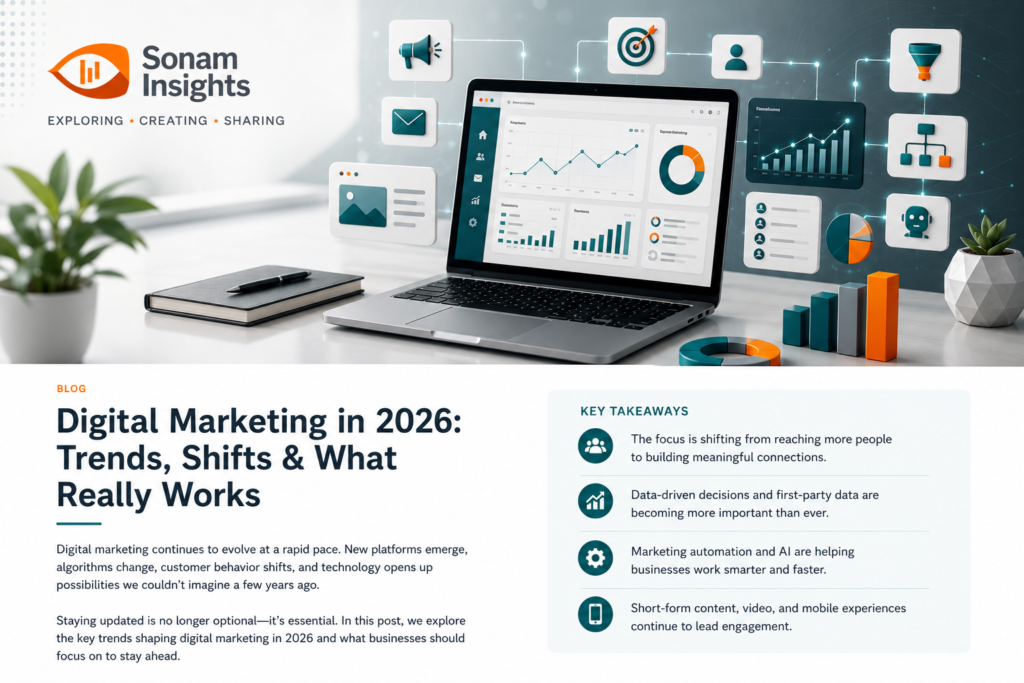
Digital Marketing in 2026: What Matters More Than Ever
Digital marketing continues to evolve at a remarkable pace. New platforms, artificial intelligence tools, automation technologies, and changing consumer expectations have transformed how businesses connect with their audiences. Yet despite these changes, one principle remains constant: successful marketing is built on understanding people and delivering value.
Today, businesses have access to more data than ever before. Every website visit, email open, social media interaction, and customer action creates valuable information. The challenge is no longer collecting data—it is turning that data into meaningful insights. Organizations that can effectively understand their audience, measure performance, and make informed decisions are better positioned to grow in an increasingly competitive environment.
The Rise of Data-Driven Marketing
Modern marketing is no longer driven solely by intuition. Analytics has become an essential part of decision-making. Businesses can now track customer behavior across multiple touchpoints, identify opportunities for improvement, and evaluate the impact of their marketing efforts with greater accuracy.
Tools such as Google Analytics, CRM platforms, and marketing dashboards help marketers understand what is working and where adjustments are needed. Data-driven marketing allows businesses to allocate resources more effectively and focus on activities that generate meaningful results.
Automation Is Becoming Essential
As businesses scale, manual processes become increasingly difficult to manage. Marketing automation helps organizations streamline repetitive tasks while maintaining consistent communication with customers.
Automated email sequences, lead nurturing workflows, customer segmentation, and personalized messaging enable businesses to deliver relevant experiences at the right time. Automation does not replace human creativity; instead, it allows teams to focus more on strategy, content creation, and customer relationships.
When implemented thoughtfully, automation improves efficiency, consistency, and customer engagement.
The Importance of a Strong Digital Presence
A company’s website remains one of its most important digital assets. It serves as a central hub where potential customers learn about products, services, and brand values.
Modern websites must do more than simply look attractive. They should provide excellent user experiences, load quickly, perform well on mobile devices, and guide visitors toward meaningful actions. Strong web design combines aesthetics with functionality to create experiences that build trust and encourage engagement.
In many cases, a website is the first interaction a customer has with a business. First impressions matter, and a well-designed digital presence can significantly influence how a brand is perceived.
Artificial Intelligence Is Changing Marketing
Artificial intelligence has become a powerful tool for marketers. From content ideation and audience research to personalization and predictive analytics, AI is helping businesses work more efficiently and make better-informed decisions.
However, successful marketing still depends on human judgment. Technology can provide insights and automate tasks, but understanding customer needs, creating compelling stories, and building authentic relationships remain fundamentally human responsibilities.
Businesses that combine AI capabilities with strategic thinking are likely to gain a competitive advantage in the years ahead.
Looking Forward
The future of digital marketing will be shaped by the integration of analytics, automation, artificial intelligence, and user-centered design. Organizations that embrace continuous learning and adapt to changing technologies will be better prepared for future opportunities.
At Sonam Insights, the focus is on exploring these evolving areas of marketing, analytics, automation, and digital growth. By understanding emerging trends and applying practical solutions, businesses can build stronger digital experiences and make more informed decisions.
The digital landscape will continue to change, but the fundamentals remain the same: understand your audience, create value, measure results, and continuously improve.